
A pH meter and an EC or TDS meter are the two most important tools in your grow room, and you need both. pH decides whether the roots can absorb the feed you have mixed; EC tells you how strong that feed is. Buy a reliable, calibrated pair and most beginner problems disappear before they ever start.
Two meters, two jobs: pH decides uptake, EC decides strength
These measure different things and one cannot stand in for the other. pH tells you how acidic or alkaline your solution is, and that single number decides whether the elements in the tank are available to the roots at all. In hydroponics and coco, hold the reservoir between 5.5 and 6.2; in soil, aim a little higher at 6.2 to 6.8. Drift outside that band and the plant starves in a full tank, because locked-out nutrients cannot cross into the root.
EC (electrical conductivity) measures how much dissolved nutrient is in the water, so it reports the strength of the feed rather than its chemistry. Run it low for young plants, around 0.5 to 0.8, climbing to 1.0 to 1.6 in veg and 1.6 to 2.4 in heavy bloom. Feed to the plant, not the bottle: if leaf tips burn your EC is too high; if growth is pale with correct pH it is too low.
TDS (total dissolved solids), quoted in ppm, is simply EC converted onto a different scale, and this is where a lot of confusion starts. Two conversion standards are in common use, the 500 scale (favored by most US brands) and the 700 scale. The same tank reads about 500 ppm on one and 700 ppm on the other, so always know which scale your pen uses before you match a number to a feed chart. If in doubt, work in EC, which carries no such ambiguity.
Meters keep a system honest. This collection is part of our Hydroponic Systems & Water Management guide, which covers how it fits the rest of your setup.
The honest bit: a cheap or uncalibrated pen lies to you
Most beginner grow problems are not nutrient problems. They are a cheap or drifting pen reporting a number that is simply wrong, so the grower chases a deficiency that was never there. A meter is a consumable measuring instrument, not a gadget you buy once and trust forever. Look after it and it saves you a crop; neglect it and it quietly misleads you for months.
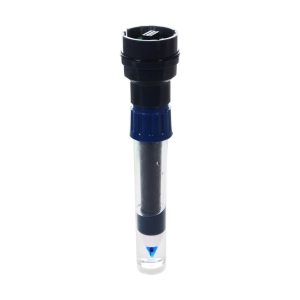
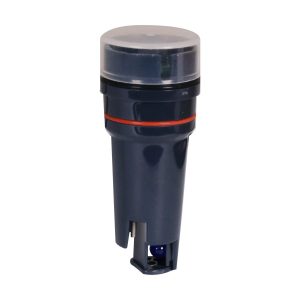
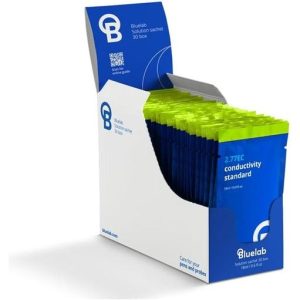
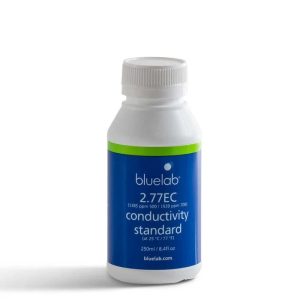
Three habits matter. Calibrate regularly against fresh buffer solutions (pH 4.0 and 7.0 for pH pens, a 2.77 EC standard for conductivity), because every probe drifts with use. Store the probe wet in proper KCl storage solution, never dry and never in plain water, since a dried-out pH bulb is the fastest way to kill a meter. And replace the probe once it will no longer hold a calibration or responds sluggishly; on most pens the electrode is a replaceable part, not a reason to bin the whole unit. We stock buffer sachets, storage and cleaning solutions and replacement probes from Bluelab, Apera, Hanna and HM Digital, so a drifting reading is a five-minute fix rather than a new purchase.
Pen or continuous monitor: pick the tool for the job
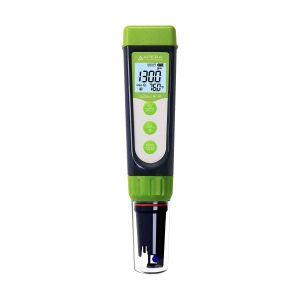
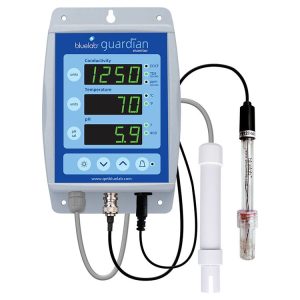
A handheld pen is the right tool for spot-checks: dip it in, read pH and EC, adjust, move on. For a recirculating reservoir you want to watch continuously, a continuous inline monitor such as the Bluelab Guardian sits in the tank and displays pH, EC and temperature around the clock, so you catch a pH swing the moment it starts instead of at the next manual check. Plenty of growers keep both: a pen for mixing and calibrating, a monitor on the res that runs quietly in the background.
| Stage | pH | EC (mS/cm) |
|---|---|---|
| Seedling / clone | 5.8–6.2 | 0.5–0.8 |
| Vegetative | 5.5–6.2 | 1.0–1.6 |
| Bloom | 5.8–6.2 | 1.6–2.4 |
| Soil (all stages) | 6.2–6.8 | as above |
pH, EC & TDS meters and solutions we stock


pH / EC / TDS Meters & Solutions


pH / EC / TDS Meters & Solutions


pH / EC / TDS Meters & Solutions


pH / EC / TDS Meters & Solutions


pH / EC / TDS Meters & Solutions

pH / EC / TDS Meters & Solutions


pH / EC / TDS Meters & Solutions


pH / EC / TDS Meters & Solutions

pH / EC / TDS Meters & Solutions

pH / EC / TDS Meters & Solutions


pH / EC / TDS Meters & Solutions


pH / EC / TDS Meters & Solutions

pH / EC / TDS Meters & Solutions
pH / EC / TDS Meters & Solutions


pH / EC / TDS Meters & Solutions


pH / EC / TDS Meters & Solutions


pH / EC / TDS Meters & Solutions

pH / EC / TDS Meters & Solutions


pH / EC / TDS Meters & Solutions


pH / EC / TDS Meters & Solutions

pH / EC / TDS Meters & Solutions

pH / EC / TDS Meters & Solutions

pH / EC / TDS Meters & Solutions

pH / EC / TDS Meters & Solutions
Frequently asked questions
Do I really need both a pH meter and an EC meter?
Yes. They measure two different things and neither substitutes for the other. pH decides whether the roots can absorb the feed, and EC tells you how strong that feed is. A pH reading in band with an unknown EC, or the reverse, only tells you half the story.
Why does my ppm reading not match the feed chart?
You are probably reading a different scale. TDS pens convert EC to ppm on either the 500 or the 700 standard, so the same tank shows about 500 ppm on one and 700 on the other. Check which scale your pen uses, or work in EC, which has no such ambiguity.
How often should I calibrate, and how do I store the probe?
Calibrate against fresh buffer solutions regularly, weekly is sensible for a working meter, and any time a reading looks off. Between uses, store the probe wet in KCl storage solution, never dry and never in plain water. When it will no longer hold a calibration, replace the probe.
Written and reviewed by the Premier Hydro Growers team. Figures and ranges are general starting points; always follow the manufacturer's instructions and adjust to your own plants, water and setup.