


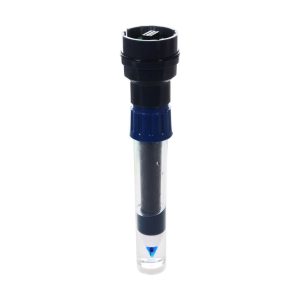


The Apera GroStar GS2-E is the replacement soil spear pH electrode for the GroStar GS2 meter, designed for growers who need accurate pH and temperature readings directly in solid and semi-solid growing media — soil, coco coir, rockwool, and other substrates — as well as in nutrient solution. When your GS2 probe reaches the end of its service life, the GS2-E lets you replace just the electrode rather than the entire instrument. The spear glass tip is impact-resistant and engineered for repeated insertion into dense media, and a PTFE junction ring prevents soil particles from clogging the reference junction — the most common failure mode for probes used in solid substrates.

Apera GroStar GS2-E Specifications
The GS2-E is a purpose-built electrode for solid and semi-solid media testing. The table below summarizes the key specifications as provided in the manufacturer’s product documentation for SKU AI58020.
| Specification | Value |
|---|---|
| SKU / Part Number | AI58020 |
| Compatible Instrument | GroStar GS2 soil spear pH meter |
| Measurement Parameters | pH and Temperature |
| Tip Design | Impact-resistant spear glass tip |
| Tip Strength | 10× stronger than conventional glass bulb |
| Junction Type | PTFE ring — prevents clogging from soil particles |
| Sensor Technology | Apera Swiss LabSen proprietary sensor |
| Compatible Media | Nutrient solution, soil, coco coir, rockwool, and similar media |
| Warranty | 1 year |
Why Choose the Apera GroStar GS2-E
A replacement electrode purchase is a decision about instrument longevity and testing accuracy. Here is what the GS2-E brings to that decision relative to other options:
- Engineered specifically for solid media: Standard pH probes use a round glass bulb tip designed for liquid immersion. The GS2-E uses an impact-resistant spear tip shaped to penetrate soil, coco coir, and rockwool without shattering. It is not simply a liquid-sample probe repurposed for media testing — the tip geometry and materials are specific to this application.
- PTFE ring junction prevents clogging: The most common failure mode for probes used in solid or semi-solid media is junction clogging: soil particles and organic matter work their way into the reference junction, destabilizing readings and eventually causing premature probe failure. The PTFE (polytetrafluoroethylene) ring on the GS2-E is specifically designed to block particle intrusion while still allowing the ionic exchange needed for accurate reference potential.
- Impact-resistant spear glass, 10× stronger than standard bulb probes: Conventional glass bulb probes are fragile in dense or rocky substrates. The GS2-E’s spear glass is formulated and shaped to withstand the mechanical stress of repeated insertion and extraction from soil and compacted coco without breaking. This directly affects how long the probe remains serviceable.
- Swiss LabSen sensor technology: The sensing element is built on Apera’s proprietary LabSen platform, the same Swiss-origin sensor architecture used across the Apera Instruments professional line. This provides the accuracy and response-time characteristics expected from a professional-grade electrode, not a consumer-market probe.
- Replaces probe only — instrument body is reused: When the GS2-E wears out, you replace the electrode, not the full GS2 instrument. Over multiple probe replacement cycles, this approach is significantly more cost-effective than replacing a complete meter each time accuracy degrades.
- 1-year warranty: GroStar backs the GS2-E with a one-year warranty, consistent with the electrode warranty structure across the GroStar instrument line.
Best Uses for the Apera GroStar GS2-E
The GS2-E is suited for any grow setting where pH testing happens directly in the root zone rather than only in free liquid. The following use cases represent the main scenarios where the spear design provides an advantage over standard liquid-immersion probes:
- Root-zone pH monitoring in coco coir grows: Coco coir can hold and release pH-affecting compounds independently of the nutrient solution pH. Testing the coco directly — rather than just the incoming or runoff solution — gives a more accurate picture of what the root zone is actually experiencing. The spear tip can be inserted into a coco-filled container or slab between waterings for a direct reading.
- Soil pH testing in container and bed grows: Whether growing in containers, raised beds, or in-ground plots, root-zone pH in soil is a direct determinant of nutrient availability. Soil pH can differ significantly from the pH of the water being applied. The GS2-E enables direct soil testing without collecting and diluting a soil sample — a faster workflow for regular monitoring.
- Rockwool slab and cube testing: Rockwool holds nutrient solution in a fibrous matrix, and the pH within the slab can differ from the irrigation solution pH, particularly if the slab has been in use for an extended period. The spear tip can be inserted into rockwool slabs and cubes for a direct reading without damaging the root system.
- Nutrient solution and reservoir testing: In addition to solid media, the GS2-E can be used for direct liquid immersion in nutrient reservoirs, mixing tanks, and runoff trays — the same tasks handled by liquid-only probes. This makes it the more versatile option when a grower needs a single electrode for both media testing and solution monitoring.
- Replacing a worn GS2 electrode: The most straightforward use case — when the existing GS2 probe is no longer calibrating reliably, or readings have become slow or unstable, the GS2-E is the direct replacement. Replacing the electrode restores full instrument performance without purchasing a new meter.
GS2-E vs Similar Replacement Electrodes
When a pH probe wears out, growers sometimes consider whether to replace with the OEM electrode or switch to a third-party replacement. For the GroStar GS2, using the GS2-E is the straightforward path: it is the manufacturer-specified replacement electrode, confirmed compatible with the GS2 instrument body, and warranted by Apera Instruments directly.
Third-party electrodes sold as compatible replacements for instruments like the GS2 vary significantly in quality. The junction design is the primary area where they tend to differ. Most lower-cost replacement probes use a ceramic or porous polymer junction that works adequately in liquid but clogs quickly in soil or coco — defeating the purpose of a soil spear instrument. The GS2-E’s PTFE ring junction is specifically selected for solid-media use and is not a feature typically reproduced by generic replacements.
The GS2-E also relies on the LabSen sensor technology that is matched to the GS2 meter’s calibration algorithm. While Apera does not publish the exact interface specifications, it is reasonable to expect that a probe designed and warranted by the same manufacturer for a specific instrument will perform more reliably across the full calibration range than an unverified third-party electrode.
If you are also monitoring EC in your nutrient solution, the Apera GroStar GS3-E replacement EC electrode is the equivalent OEM replacement for the GS3 EC meter, keeping your calibration approach consistent across both measurement parameters.
Compatibility
The GS2-E is the designated replacement electrode for the GroStar GS2 soil spear pH meter. It is not a general-purpose probe sold to fit multiple instrument brands — it is matched to the GS2’s connector, calibration system, and sensing range.
Compatible instrument: GroStar GS2 soil spear pH meter. Do not attempt to use the GS2-E with a different meter model, even within the GroStar line, as connector types and calibration protocols differ between models.
Media compatibility: The GS2-E is rated for use in nutrient solution, soil, coco coir, rockwool, and comparable semi-solid growing media. It is not designed for use in strong acids or bases, high-temperature liquids, or food-processing applications.
Temperature range: The electrode measures temperature as part of its dual-parameter output. Consult the GS2 instrument manual for the operating temperature range applicable to both the meter and this replacement electrode.
Calibration solutions: Use standard pH 4.00 and pH 7.00 buffer solutions for calibration — these are universal across pH probes. The Apera GroStar EC Calibration Kit is the matching calibration solution set for growers who maintain both pH and EC measurement within the GroStar ecosystem.
Usage Guidelines
pH electrodes — including spear-type probes — require consistent handling to deliver reliable results. The following guidelines apply to the GS2-E based on the manufacturer’s documented features and standard pH electrode operating practice.
Before first use: Soak the electrode tip in pH 7 buffer solution or KCl storage solution for 15–30 minutes before performing the initial calibration. This conditions the glass membrane and reference junction for stable readings. Avoid soaking in distilled or deionized water, which can leach ions from the membrane.
Calibration: Calibrate the electrode after installing it in the GS2 instrument and after any extended period of non-use. Use fresh pH 4.00 and pH 7.00 calibration buffers. Rinse the electrode tip with clean water between buffer solutions. Allow the reading to stabilize at each calibration point before confirming. Re-calibrate if you observe readings that seem inconsistent with expected values for your media or solution.
Testing in solid media: When inserting the spear tip into soil, coco coir, or rockwool, pre-moisten the media slightly if it is very dry — pH readings in dry media are unreliable because adequate ionic contact between the probe and the substrate requires some moisture. Insert the electrode cleanly and hold it steady for a stable reading. Withdraw at the same angle as insertion to minimize tip stress.
Rinsing between samples: Rinse the electrode tip thoroughly with clean water between samples and between calibration sessions. When moving from high-nutrient media testing to calibration buffers, a careful rinse prevents nutrient carryover that could skew calibration.
Storage between uses: Store the electrode tip in a KCl storage solution or in a pH 7 buffer. Never store the tip in distilled water or allow it to dry out — both conditions degrade the glass membrane and shorten probe life. Reattach the protective storage cap when the probe is not in use.
Signs of probe wear: A probe nearing end of life will typically show slow response (reading takes more than 30–60 seconds to stabilize), inability to calibrate accurately, or persistent drift. When these symptoms appear, the GS2-E electrode replacement restores full GS2 instrument performance.
How to Install the GS2-E Replacement Electrode
- Power off the GS2 meter before removing the old electrode. This prevents any electrical irregularities during the swap and protects both the instrument circuitry and the new electrode.
- Remove the worn electrode from the GS2 instrument body. Depending on the GS2 design, this is typically done by unscrewing the electrode connector at the base of the probe. Handle the old probe carefully — the spear glass tip, even when worn, should be disposed of properly rather than broken.
- Inspect the GS2-E before installation. Check the spear tip for any damage that may have occurred during shipping. The PTFE junction ring should be intact. If the probe arrived dry, soak the tip in pH 7 buffer or KCl storage solution for 15–30 minutes before continuing.
- Connect the GS2-E to the GS2 instrument body. Thread or insert the electrode connector as specified for the GS2. Ensure the connection is secure — a loose connection can cause erratic readings.
- Perform a fresh calibration. A new or freshly installed electrode requires calibration before first use. Use pH 4.00 and pH 7.00 calibration buffers. Follow the GS2 instrument’s calibration procedure step by step. Do not skip calibration on a new probe even if the meter retained previous calibration data — new probes have slightly different characteristics and must be calibrated independently.
- Verify with a known-value sample. After calibration, test a calibration buffer again as a verification check. The reading should fall within ±0.1 pH units of the buffer’s labeled value. If it does not, repeat the calibration procedure before testing actual samples.
- Begin normal testing. The GS2 with the freshly installed GS2-E is now ready for use in soil, coco, rockwool, nutrient solution, or other media. Follow the usage guidelines above for routine maintenance.
Sources & Further Reading
Specifications, features, and warranty terms for the Apera GroStar GS2-E Replacement Soil Spear pH Electrode have been compiled from manufacturer documentation. For the most current product specifications, replacement electrode availability, and calibration guidance, refer to the Apera Instruments manufacturer site:
| Weight | 0.2998 lbs |
|---|---|
| Brand | GroStar |
Be the first to review “Apera GroStar GS2-E Replacement Soil Spear pH Electrode”
Related products


pH / EC / TDS Meters & Solutions


pH / EC / TDS Meters & Solutions

pH / EC / TDS Meters & Solutions

pH / EC / TDS Meters & Solutions

pH / EC / TDS Meters & Solutions


pH / EC / TDS Meters & Solutions
Hanna GroLine Hydroponic Waterproof Pocket pH/EC/TDS/Temperature Tester


pH / EC / TDS Meters & Solutions

pH / EC / TDS Meters & Solutions
Reviews
There are no reviews yet.