


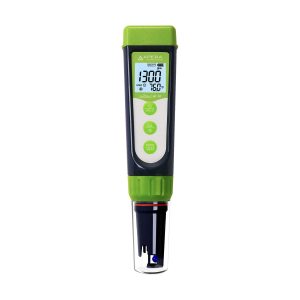


The Apera GroStar GS4 (SKU: AI21040) is a 5-in-1 combo pen that measures pH, EC, 500 ppm, 700 ppm, and temperature in a single instrument. Designed as a lab-grade tool for working growers, it combines a double junction replaceable probe with an IP67 waterproof body and a 3-color backlit display — covering the two most critical water quality checks in hydroponics without carrying two separate meters.

Apera GroStar GS4 Specifications
The GS4 is built around a replaceable double junction probe and a 5-parameter measurement set. The table below lists the key specifications drawn from manufacturer documentation for SKU AI21040.
| Specification | Value |
|---|---|
| SKU / Model | AI21040 — GroStar GS4 |
| Measurement Parameters | pH, EC, 500 ppm (TDS), 700 ppm (TDS), and Temperature (5-in-1) |
| Probe Type | Double junction, replaceable electrode |
| Probe Compatibility | Compatible with all GroStar replacement probes: pH, Soil pH, EC, pH/EC Combo |
| Display | Large 3-color backlit LCD |
| Temperature Compensation | Automatic (ATC) |
| Waterproof Rating | IP67 |
| Power Source | AAA batteries (auto-off function included) |
| Instrument Warranty | 2 years |
| Probe Warranty | 1 year |
| Weight | 0.80 lb |
| In the Box | pH 7 calibration solution (50 ml), pH 4 calibration solution (50 ml), 2.77 EC calibration solution (50 ml), KCl storage solution (10 ml), lanyard, user manual |
Why Choose the Apera GroStar GS4 pH/EC Combo Pen
Managing both pH and EC with a single calibrated instrument has practical advantages in daily grow-room operation. The GS4 was built to address several points where budget combination meters typically fall short:
- 5-in-1 measurement without switching instruments: The GS4 reads pH, conductivity as EC, conductivity as 500-scale ppm, conductivity as 700-scale ppm, and temperature in one pen. Most growers need at least pH and EC; the GS4 covers both without requiring two separate pens, two calibration routines, or two sets of buffer solutions on the bench.
- Replaceable double junction probe: The double junction design is more resistant to fouling in high-nutrient solutions than single junction electrodes. When the probe eventually wears out, you replace only the probe — not the instrument body and electronics. The GS4 accepts all GroStar replacement probes, including the dedicated EC electrode and the pH/EC Combo replacement.
- IP67 waterproof construction: The GS4 is rated for temporary submersion, meaning it is built for wet grow-room use near open reservoirs, in-line with drip systems, or on tables where water is routinely present. Accidental drops into shallow nutrient solution will not necessarily destroy the instrument.
- 3-color backlit display: The large display changes color to signal pH status at a glance, reducing misreads in variable lighting. Both the pH/EC value and temperature are visible simultaneously, so you do not need to toggle between parameters during a measurement session.
- Automatic temperature compensation (ATC): Both pH and EC are affected by solution temperature. The GS4 applies ATC automatically during measurement, so readings taken in a cold reservoir at the start of lights-on and a warm reservoir mid-day are comparable without manual correction.
- Complete calibration kit included: The GS4 ships with pH 4, pH 7, and 2.77 EC calibration solutions plus KCl storage solution. You can perform a full initial calibration of both the pH and EC measurement functions before the first use without any additional purchase.
- 2-year instrument / 1-year probe warranty: GroStar’s split warranty structure acknowledges that the probe is a consumable element with a shorter service life than the instrument electronics. Both are covered separately.
Best Uses for the Apera GroStar GS4 pH/EC Combo Pen
The GS4 is most useful where both pH and conductivity need to be checked in the same location, in quick succession, or by a grower who prefers a single-instrument workflow:
- Nutrient reservoir preparation and top-off: When mixing a new reservoir batch or adding water and nutrients to top off, growers typically need to verify both EC (that nutrient concentration is within target range) and pH (that the solution is within the absorption window for their crop). The GS4 lets you cycle through both checks without swapping instruments or disturbing a calibration session.
- Daily reservoir checks in DWC, RDWC, and NFT systems: In recirculating hydroponic systems, reservoir EC and pH should be checked daily or before each feeding cycle. Having both measurements on one pen simplifies the daily log and reduces the number of instruments that need to be stored, calibrated, and maintained.
- Runoff and drain-to-waste monitoring in coco and perlite grows: Checking runoff EC alongside runoff pH gives a complete picture of what is leaving the root zone after each watering. The GS4 handles both readings in the same collection cup without switching tools.
- Irrigation water source testing: Before adding nutrients, testing source water EC establishes the baseline mineral load you are working with. Paired with the pH reading, this lets you calculate how much pH down or up is needed and whether your source water EC is high enough to affect your target nutrient concentration.
- Greenhouse and multi-bench operations: The pen form factor and lanyard allow the GS4 to be carried between tables, reservoirs, or zones. IP67 protection makes it suitable in environments with high ambient humidity or irrigation overspray.
Apera GroStar GS4 vs Similar Combo Meters
The GS4 occupies the mid-range segment for combination pH/EC pens. Entry-level combo meters at this price tier typically use a fixed, non-replaceable probe design. When the probe fails — and probes in high-EC nutrient solution environments do wear out — the entire instrument must be discarded. The GS4’s replaceable probe addresses this directly: only the probe is a consumable, and the GroStar replacement probe ecosystem means you are not locked into a single electrode type. If your grow style shifts (for example, from recirculating hydroponics to soil or coco), you can swap to a Soil pH probe or a straight EC probe on the same instrument body.
The included 2.77 EC calibration solution is a practical differentiator versus combo pens that ship without EC calibration fluid. EC calibration is meaningless without a reference solution of known conductivity — meters that omit this from the box require an immediate accessory purchase before first use. The GS4 is calibration-ready on arrival for all five measurement parameters.
Growers who only need pH and temperature — and have no use for EC or TDS readings — may find the single-parameter GroStar GS1 pH Pen to be a more appropriate fit. The GS1 shares the same replaceable probe architecture and IP67 rating at a lower cost for pH-only applications.
Compatibility
The GS4 is a standalone handheld instrument. It does not require a controller, data logger, or system integration to function. The following notes cover the replacement probe ecosystem and system compatibility.
Replacement probes: The GS4 is compatible with the full GroStar replacement probe lineup, including the pH probe, Soil pH probe, EC probe, and pH/EC Combo probe. This means you can replace a worn electrode without purchasing a new instrument, and you can swap probe types based on your current growing medium. The GroStar GS3-E replacement EC electrode is an example of a compatible replacement available separately.
Calibration solutions: The 2.77 EC calibration solution included in the box is compatible with the EC measurement function. If you need additional EC calibration solution, the Apera GroStar EC Calibration Kit (2.77 EC) is a direct match for the GS4’s calibration requirements.
Grow system types: The GS4 works with any hydroponic system — DWC, RDWC, NFT, ebb and flow, drip, and aeroponics — as well as coco, perlite, and soil substrate grows. No system-specific configuration is required beyond standard calibration.
Power: The GS4 runs on standard AAA batteries with an auto-off function. No charging cable or dock is required, which keeps the pen operationally ready without planning around charge cycles.
Usage Guidelines
Accurate pH and EC readings depend on regular calibration and correct probe maintenance. The following guidelines are based on the manufacturer’s documented features and standard practice for double junction pH/EC combo pens.
Calibration frequency: Calibrate the GS4 before first use, and recalibrate regularly during active use — typically weekly, or before any measurement session where precision is critical. The GS4 includes buffer solutions for a full two-point pH calibration (pH 4 and pH 7) and a single-point EC calibration (2.77 EC). Both calibrations should be performed after replacing the probe.
Calibration order: Calibrate the pH function and the EC function independently as directed in the user manual. Rinse the probe with clean water between calibration buffer solutions. Allow the reading to stabilize before confirming each calibration point — the GS4’s fast calibration adjustment means this does not require a long wait.
Probe storage: Store the probe tip in the included KCl storage solution between uses. Dry storage or storage in distilled water shortens probe life significantly. The 10 ml KCl bottle included in the box is sufficient for probe storage; refill with manufacturer-approved KCl solution when it runs low.
EC scale selection: The GS4 reads conductivity in three scales — EC, 500-scale ppm, and 700-scale ppm. EC is the universal unit; 500-scale and 700-scale ppm are conversion conventions used by different nutrient programs and in different regional markets. Confirm which scale your nutrient program uses before recording readings. Both ppm scales are derived from the same underlying EC measurement.
Temperature reading: The display shows temperature alongside the pH or EC reading. Use this to verify your nutrient solution temperature is within target. ATC corrects the pH and EC values for temperature automatically, but knowing solution temperature is still useful for monitoring dissolved oxygen levels and nutrient uptake rates in hydroponic reservoirs.
Rinsing between samples: Rinse the probe with clean water between samples. When moving from high-EC nutrient solution to calibration buffers, a thorough rinse prevents carryover contamination. Blot the probe tip gently rather than wiping, which can scratch the electrode surface.
How to Set Up and Use the Apera GroStar GS4
- Unbox and inspect: Remove the GS4 from packaging. Check the probe tip and protective storage cap for any shipping damage. Install AAA batteries in the battery compartment per the diagram in the user manual.
- Hydrate the probe (first use): If the probe tip arrived dry, place it in the included KCl storage solution for 15–30 minutes before calibration. A hydrated probe stabilizes faster and calibrates more accurately.
- Calibrate pH — first point: Pour a small amount of pH 7 buffer solution into a clean container. Rinse the probe with clean water, then immerse the probe tip in the pH 7 buffer. Power on the GS4 and allow the reading to stabilize. Follow the user manual to confirm the first calibration point.
- Calibrate pH — second point: Rinse the probe with clean water. Pour a small amount of pH 4 buffer solution into a clean container. Immerse the probe and allow the reading to stabilize, then confirm the second calibration point per the user manual. Two-point calibration covers the typical hydroponic pH target range of 5.5–6.5.
- Calibrate EC: Rinse the probe with clean water. Pour a small amount of the 2.77 EC calibration solution into a clean container. Immerse the probe and allow the reading to stabilize, then confirm the EC calibration point. This single-point calibration sets the conductivity measurement baseline.
- Test your solution: Rinse the probe with clean water after calibration. Immerse the probe tip in your nutrient solution, reservoir, or runoff sample. Allow the reading to stabilize on the 3-color backlit display. The GS4 will show the pH or EC value (and temperature) depending on the active measurement mode. Cycle between measurement modes as needed.
- Record readings: Note pH, EC (or ppm on your preferred scale), and temperature. ATC is active during measurement, so the values displayed already account for solution temperature.
- Rinse and store: After each use, rinse the probe with clean water. Replace the storage cap filled with KCl storage solution. Allow the auto-off function to engage or power off manually. Store in a clean, dry location with the probe tip submerged in KCl within the storage cap.
- Replace probe when needed: When pH or EC readings become slow to stabilize, unstable at a known standard, or cannot be brought into calibration, it is time to replace the probe. Order the appropriate GroStar replacement probe, unscrew the worn electrode, and thread on the new one. The instrument body continues in service.
Sources & Further Reading
Specifications, features, and warranty terms for the Apera GroStar GS4 pH/EC Combo Pen have been compiled from manufacturer documentation. For current product specifications, calibration guidance, and replacement probe availability, refer to the Apera Instruments manufacturer site:
| Weight | 0.8025 lbs |
|---|---|
| Brand | GroStar |
Be the first to review “Apera GroStar GS4 pH/EC Combo Pen”
Related products

pH / EC / TDS Meters & Solutions


pH / EC / TDS Meters & Solutions

pH / EC / TDS Meters & Solutions


pH / EC / TDS Meters & Solutions


pH / EC / TDS Meters & Solutions


pH / EC / TDS Meters & Solutions


pH / EC / TDS Meters & Solutions
Hanna GroLine Hydroponic Waterproof Pocket pH/EC/TDS/Temperature Tester


pH / EC / TDS Meters & Solutions
Reviews
There are no reviews yet.